
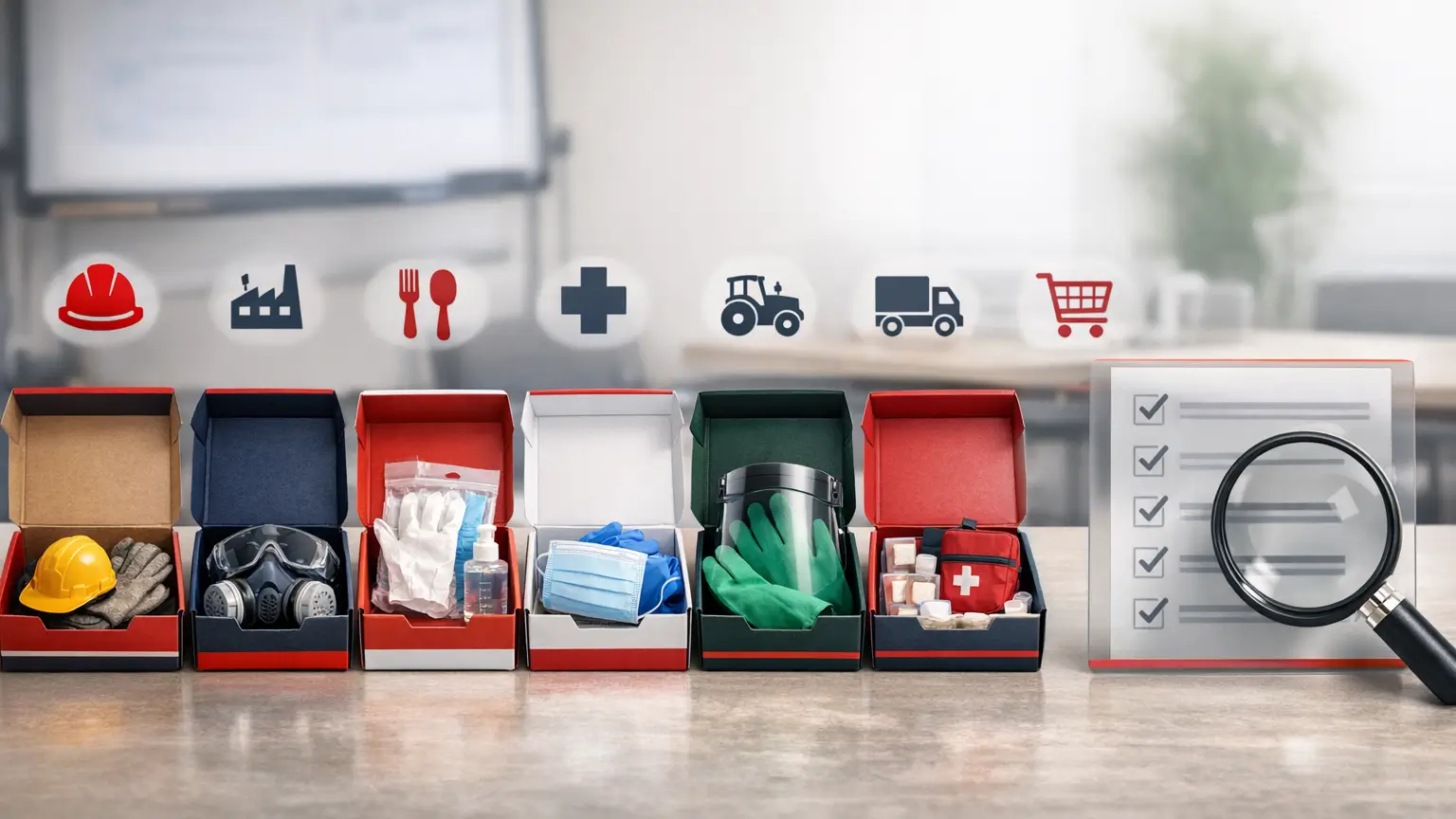




Key Takeaways
Q1: What is “Do 7 industries in Malaysia need different kit contents once they understand what is osha malaysia” and why does it matter?
A: It means aligning first aid kit contents to each industry’s hazard profile under Malaysia’s OSH Act 1994 mindset, reducing injury downtime, audit risk, and brand damage that can hurt growth and investor confidence.
Q2: How does it work in practice once you understand what is osha malaysia?
A: You map workplace hazards (cuts, burns, falls, chemical exposure) to kit modules, document “so far as practicable” decisions, and set restock/inspection routines so procurement matches risk, not generic kit marketing.
Q3: What should the reader do next?
A: Identify your sector, list top incident risks from tasks and sites, compare them to your current kit, then standardise a refill schedule and placement plan to keep teams response-ready across offices, sites, or warehouses.
What is osha Malaysia is a question that often signals a bigger operational gap: many Malaysian companies treat workplace safety as a “one-kit-fits-all” purchase instead of a hazard-driven business system.
In practice, the moment you translate safety obligations into procurement decisions, you discover that kit contents should change by industry, worksite layout, response time, and the type of injuries your teams are most likely to face.
For SMEs, startups, and fast-scaling teams, first aid readiness is not just a compliance checkbox—it’s a continuity safeguard.
A minor laceration in an office setting may require only basic dressings and antiseptics, while a warehouse, construction site, or workshop may face higher-severity risks like crush injuries, deep cuts, falls, chemical splashes, heat stress, or delayed ambulance access.
Those realities drive different kit modules, different placement rules, and different restocking schedules.
This matters for brand credibility too. Investors, partners, and high-value clients increasingly expect disciplined risk controls—especially when your work involves multiple sites, contractors, or public-facing operations.
“This is an example of testimonials” is the kind of trust cue readers look for: proof that a business doesn’t just talk about standards but operationalises them with clear SOPs, measurable checks, and consistent readiness.
In this article, you’ll see how 7 common Malaysian industry contexts translate hazards into practical kit content decisions—so your buying becomes defensible, scalable, and aligned with real-world work conditions.
What is osha Malaysia and why do Malaysian businesses keep mixing it up with U.S. OSHA?
Many Malaysians type what is osha malaysia expecting a single rulebook, but Malaysia uses its own Occupational Safety and Health framework, so copying U.S.-style OSHA language can create policy gaps and misleading procurement decisions.
What does “OSH” mean in Malaysia, and which authority enforces it in practice?
In Malaysia, OSH is anchored on statutory duties, workplace risk control, and enforcement expectations that typically involve the Department of Occupational Safety and Health (DOSH/JKKP) and practical evidence of prevention measures.
How does DOSH/JKKP fit into day-to-day compliance and inspections?
DOSH/JKKP matters because inspections and incident follow-ups often look for proof you identified hazards, reduced risks, trained staff, and maintained essential controls like emergency response readiness.
Why is the U.S. OSHA framework useful only as a comparison, not as Malaysia’s legal reference?
U.S. OSHA materials can help explain hazard categories and safety culture, but they are not Malaysia’s legal baseline, so businesses should treat them as education—not as the compliance standard.
Which common “OSHA rights” expectations do people wrongly copy into Malaysia policies?
Common confusion includes copying U.S. poster-style requirements, complaint pathways, and terminology without mapping them to Malaysia’s OSH Act 1994 expectations and the evidence trail businesses must maintain locally.
Optimization also matters when your safety content must be discoverable and understood across teams.
OSHA 1994 — What does Malaysia’s Occupational Safety and Health Act 1994 actually require that affects first aid readiness?
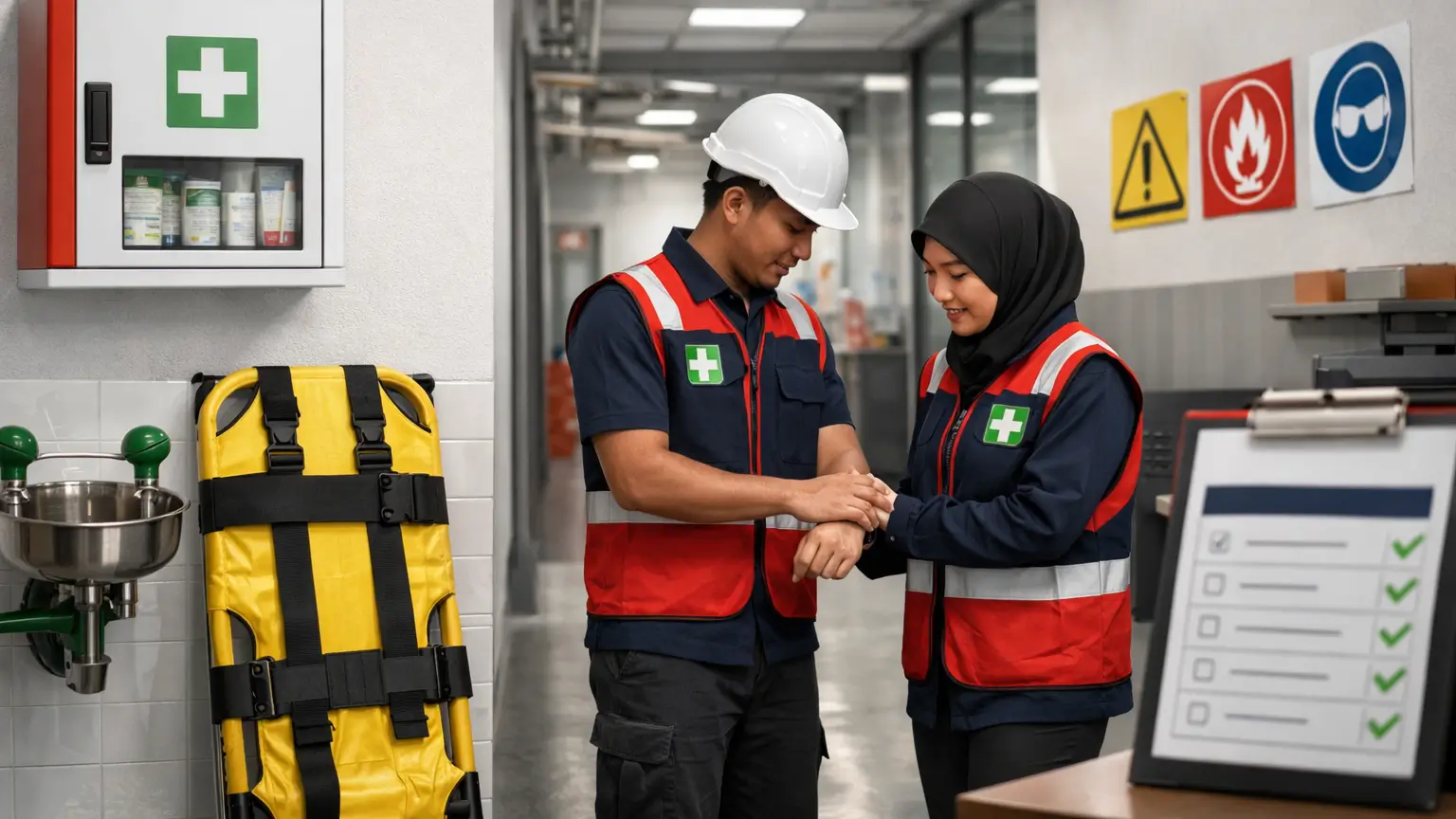
Under OSHA 1994 thinking (Malaysia’s OSH Act 1994 mindset), first aid readiness becomes a risk-control decision: your kit contents, placement, and replenishment must match hazards, workforce size, and access-to-care realities.
What is the legal scope of the Act, and which industries does it apply to?
The OSH Act 1994 is designed to protect people at work across many sectors, so “coverage” in practice is broad enough that most businesses should assume they need documented safety controls.
Which industry categories typically shape baseline risk assumptions?
Construction, manufacturing, logistics, utilities, kitchens, healthcare services, and field work tend to generate higher-severity risk profiles than office-based environments, which is why kit planning must differ.
Why does “general duties of employers” logic change how you justify first aid kit contents?
Employer duties translate into an expectation of proactive prevention and readiness, meaning first aid kits are not decorative assets—they are operational controls that must be justified by hazard assessment and maintained over time.
How does “so far as practicable” become evidence-based kit decisions?
You show “practicable” by linking job tasks to foreseeable injuries, then documenting what you stocked, why you stocked it, where it is located, and how you ensure it is usable during real incidents.
What documentation supports defensible kit provisioning after an incident?
Incident logs, hazard registers, training attendance, monthly inspection checklists, procurement records, and site maps are the usual artifacts that make your kit decisions explainable to auditors, clients, and internal leadership.
Many businesses also align safety documentation with broader management systems and procurement discipline. ISO certification in Malaysia
Do different industries in Malaysia need different kit contents after they understand what is osha malaysia?
Yes—after you truly grasp what is osha Malaysia, you stop buying generic kits and start buying response capability, because injury types, response time, and hazard exposure vary significantly by sector and worksite design.
Why “one standard kit” becomes risky when hazards and response constraints change
A single kit template fails when you introduce sharp tools, high heat, chemical handling, remote locations, or dense shifts, because the likelihood and severity of injuries shift beyond “minor cuts and bruises.”
How do response time, injury severity, and exposure determine kit modules?
If ambulance access is delayed or injuries can be severe, you prioritise bleeding control, immobilisation, burns management, eye irrigation, and protective barriers, not just plasters and antiseptic wipes.
What hazard categories should drive kit customisation across industries?
The safest approach is to classify hazards into predictable injury pathways—bleeding, burns, eye exposure, respiratory irritation, sprains/fractures, and contamination—then align kit modules to those pathways.
Which hazards map directly to kit modules using what is osha malaysia logic?
Using what is osha malaysia as a risk lens, lacerations map to dressings and bandages, burns map to burn care items, chemical splashes map to eyewash solutions, and manual handling maps to immobilisation support.
How can a hazard-to-kit matrix reduce understocking and overbuying?
A simple matrix prevents “feel-based” buying, because you purchase based on credible risk scenarios, workforce count, and depletion patterns, while setting a refill cycle that matches your operational tempo.
Which 7 industry examples show the clearest differences in kit content needs?
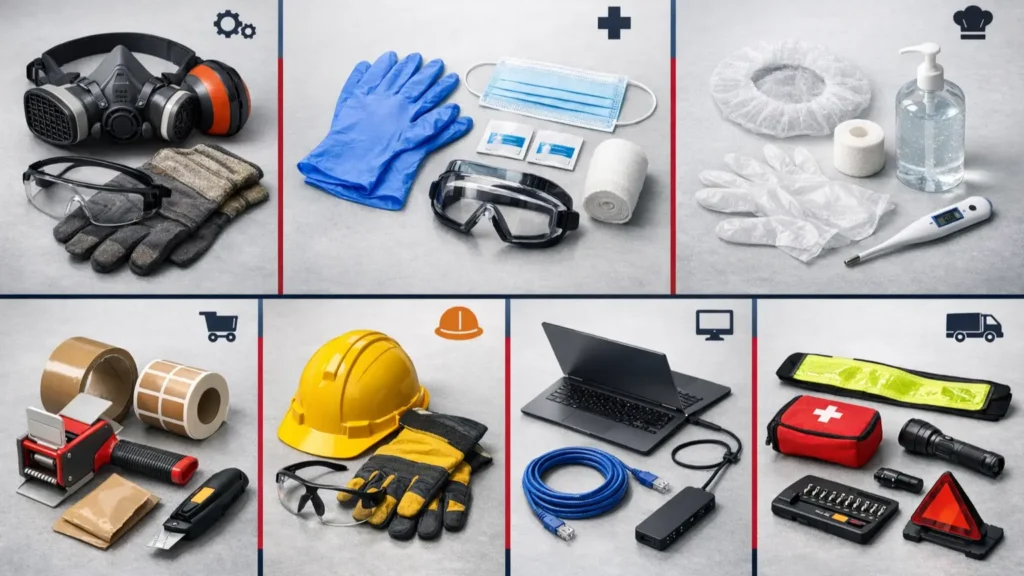
These seven examples help Malaysian businesses translate what is osha malaysia into procurement reality, because each sector has distinct injury mechanisms, workflow constraints, and “time-to-first-aid” requirements.
How should offices and digital teams stock for slips, cuts, and minor burns?
Office kits should focus on fast treatment of minor injuries and safe hygiene, because the dominant risks are paper cuts, trips, small burns, and occasional dizziness or fainting events.
What depletes fastest in low-risk settings?
Plasters, antiseptic solutions, sterile gauze, adhesive tape, and disposable gloves typically run out first—especially in shared spaces with pantry areas and high foot traffic.
How should construction sites stock for trauma, falls, and remote access constraints?
Construction environments need higher-response capacity, because fall risk and tool injuries can create rapid blood loss, immobilisation needs, and delayed emergency services due to site access issues.
Which “grab-and-go” items matter when access is delayed?
A portable trauma-ready pouch, strong dressings, triangular bandages, instant cold packs, and clear kit labelling are often more valuable than a bulky box stored far from the work front.
How should manufacturing and workshops stock for machinery and sharp-tool incidents?
Workshops need robust bleeding management and eye protection readiness, because sharp edges, pinch points, metal fragments, and repetitive tasks elevate laceration and foreign-body injury risk.
What add-ons help when pinch points and sharp tools are routine?
Eye wash support, stronger dressings, finger bandages, and splinter-related items are commonly needed, alongside disciplined restocking because usage spikes after minor incidents.
How should logistics and warehouses stock for strains and impact injuries?
Warehouses require smart placement and replenishment discipline, because injuries often happen far from office areas and involve strains, collisions, and cuts from packaging tools.
Where should kits be placed to reduce walk-time?
Place kits near loading bays, racking aisles, and high-traffic intersections, and add clear signage so staff can locate them instantly during a stressful event.
How should F&B kitchens stock for burns under hygiene constraints?
Kitchens need burn-focused readiness and contamination-aware storage, because hot liquids, oil splashes, and sharp knives create predictable injury patterns in tight, fast-paced spaces.
Which storage practices prevent contamination while keeping access fast?
Use sealed containers, keep kits away from splash zones, and assign a responsible person per shift to inspect depletion and ensure items remain clean and within expiry.
How should healthcare and cleaning environments stock for exposure management?
These environments require barrier protection and exposure controls, because contact with body fluids, chemicals, and contaminated surfaces increases cross-contamination risk and demands stricter handling discipline.
What separates basic first aid from exposure-aware readiness?
You prioritise gloves, masks, protective barriers, eye irrigation support, and disposal discipline, plus a clear escalation pathway for exposure incidents beyond simple cuts.
How should utilities and field services stock for outdoor and dispersed crew realities?
Field teams need portable, replenishable kits, because heat stress, distance-to-care, and varied job sites demand mobility and predictable restocking tied to vehicle checks or daily deployment routines.
Which portability and refill strategy works best?
Use modular refill packs in vehicles, standardise kit layouts across crews, and connect restocking to routine operational checks so readiness does not depend on one person’s memory.
What can SMEs and startups do next to make kit procurement defensible, scalable, and audit-friendly?
SMEs can operationalise what is osha malaysia by building a lightweight, repeatable system: hazard assessment, kit module mapping, monthly inspection, and clear internal communication that turns safety into a brand trust signal.
How do you build a simple procurement checklist that ties hazards to kit content?
Start with your top five incident scenarios per site, assign kit modules to each scenario, set minimum stock levels, define placement points, and document who checks, when, and how exceptions are handled.
What should be reviewed monthly?
Expiry dates, depletion rates, incident log notes, new tasks or equipment changes, staff turnover, and site layout changes should trigger kit updates, not just “restock when empty.”
How can content templates make compliance communication easier for teams?
Tools like Piktochart-style visual templates can turn your checklist into a one-page poster, a WhatsApp-ready graphic, or an onboarding slide—making safety clarity easier for staff, partners, and clients.
For more Malaysian business strategy and practical operating playbooks, browse Bisnes.
Your safest takeaway from what is osha malaysia is simple: kit contents must match hazards, not marketing labels.
When employers treat first aid supplies as a risk-control system—mapped to tasks, sites, response time, and depletion patterns—readiness becomes defensible and scalable.
For SMEs and startups, this reduces downtime, stabilises operations across teams, and protects credibility with clients, partners, and investors who expect disciplined governance.
If your workplace spans different tasks—office admin, warehousing, site work, kitchens, or field teams—your kit should reflect that reality with modular refills and predictable restocking.
Explore industrial-grade supplies that support practical readiness across common Malaysian work environments via Industrial First Aid Kit Supplies.
Treat your purchase as an operations decision: map hazards, standardise kit placement, and track depletion so your team is ready when incidents happen.
FAQ
What is what is osha malaysia in one sentence for quick internal alignment?
what is osha malaysia refers to how Malaysians interpret workplace safety obligations, but operationally it should point teams to Malaysia’s OSH Act 1994 mindset—hazard control, employer duties, and evidence-based readiness.
Which industry should upgrade from “office kit” to “industrial kit” first?
Industries with higher-severity hazards—construction, manufacturing, logistics, kitchens, and field services—should upgrade first because injuries escalate faster, response time can be slower, and generic consumables rarely match real incident profiles.
How often should first aid kit contents be inspected and restocked for growing companies?
A monthly inspection with immediate replenishment works well for most SMEs, but high-usage sites often need weekly checks because depletion rates rise with headcount, shift work, and multi-site operations.
Can kit customisation reduce business risk beyond compliance?
Customisation reduces operational risk by shortening response time, lowering incident disruption, and improving audit defensibility, because documented hazard-to-kit alignment shows management took practical steps to protect workers and continuity.
How do you keep first aid procurement consistent across multiple branches?
Standardise kit modules by hazard type, use a uniform checklist and layout across branches, and assign ownership per site so replenishment is routine and not dependent on ad hoc individual behaviour.