

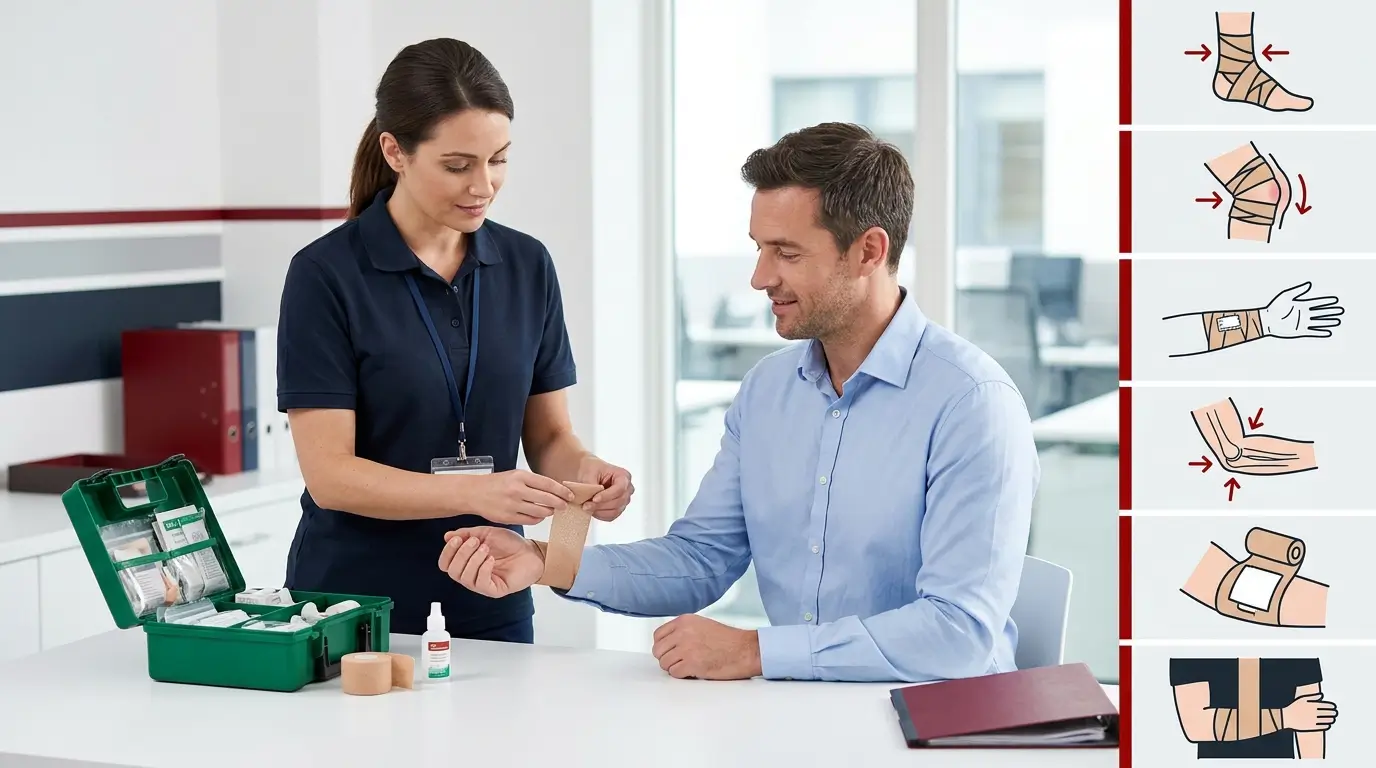




Key Takeaways
1. What are the 6 common uses of crepe bandage for workplace first aid?
A crepe bandage is commonly used to support sprains, reduce swelling, stabilise joints, secure sterile dressings, protect wound coverings, and apply gentle pressure during minor workplace first aid situations.
2. How does a crepe bandage work in a fast first aid response?
A crepe bandage works by providing controlled compression, light support, and dressing retention, helping workplace first aiders manage minor soft tissue injuries before further medical assessment is needed.
3. What should Malaysian businesses do next?
Malaysian businesses should keep different crepe bandage sizes in their workplace first aid kits, train staff on safe wrapping techniques, and review supplies regularly for safer emergency readiness.
A crepe bandage is one of the most practical first aid supplies for managing minor workplace injuries before professional medical care is needed.
In offices, retail outlets, warehouses, events, clinics, and small business premises, minor sprains, strains, knocks, swelling, and dressing support issues can happen without warning.
Having the right bandage available helps first aiders respond faster, safer, and with more confidence.
For Malaysian businesses, workplace first aid is not only about compliance. It is also about staff welfare, operational continuity, and brand professionalism.
A company that prepares basic emergency tools shows employees, customers, partners, and visitors that safety is taken seriously.
This is especially relevant for SMEs, start-ups, event teams, digital agencies, production crews, and customer-facing businesses where physical movement, setup work, deliveries, or on-site activities may increase injury risks.
A crepe bandage is commonly used because it provides gentle compression, flexible support, and dressing retention. However, it must be applied correctly.
Wrapping too tightly may affect circulation, while using it directly on an open wound without a sterile dressing can create unnecessary risk. That is why understanding the correct use matters.
This guide explains the 6 common uses of crepe bandage for workplace first aid, how elastic crepe bandage and cotton crepe bandage fit into first aid planning, and when businesses should seek medical support instead of relying only on bandaging.
What Is a Crepe Bandage in Workplace First Aid?
A crepe bandage is a woven, flexible first aid bandage used to provide light compression, support injured soft tissue, and secure dressings during minor workplace injury response.
A crepe bandage is usually made from cotton, elastic fibres, or a blend of both. Its stretchable texture allows it to wrap around body areas such as the wrist, ankle, elbow, knee, hand, or forearm without creating a rigid cast effect.
In workplace first aid, it is not designed to “cure” an injury. Instead, it helps control movement, reduce discomfort, hold a dressing in place, and support the injured area until the person can rest or seek medical care.
How Does a Crepe Bandage Support Minor Workplace Injuries?
A crepe bandage supports minor workplace injuries by giving controlled pressure around muscles, tendons, ligaments, and joints without fully preventing natural movement.
For example, if an employee twists an ankle while walking down steps, a properly applied bandage can help support the area while reducing unnecessary movement. If a staff member strains a wrist during packing, lifting, or event setup, the bandage may provide temporary support.
Why Compression Matters for Sprains, Strains and Swelling
Compression helps manage swelling by applying light pressure around the injured soft tissue area, but it must never be so tight that it affects blood circulation.
How Light Pressure Helps Reduce Fluid Build-Up
Light pressure can help reduce excess fluid accumulation around an injured area, especially after minor sprains or strains.
When Compression Should Feel Firm but Not Too Tight
The bandage should feel supportive, not painful, numb, cold, or restrictive.
Why Should Malaysian Businesses Understand Crepe Bandage Use in Workplace First Aid?
Malaysian businesses should understand crepe bandage use because minor injuries can happen in offices, warehouses, retail stores, clinics, events, workshops, and customer-facing environments.
First aid readiness is part of responsible business operations. Even for digital-first brands, influencer teams, marketing crews, or SMEs, daily work may involve movement, equipment handling, deliveries, video production, display setup, or client events.
A simple workplace first aid item can make a practical difference when staff need immediate support before further care, especially when businesses publish safety-related educational content under the Kesihatan category.
How First Aid Readiness Supports Safer Business Operations

First aid readiness supports safer business operations by helping staff respond quickly, reduce panic, and manage minor injuries before they disrupt productivity or customer service.
Businesses that prepare first aid kits show better internal discipline. This also supports trust when employees, visitors, collaborators, or clients are present at the workplace.
Why Workplace Injuries Can Affect Productivity and Staff Confidence
Even a minor sprain or small wound can delay work, reduce mobility, and affect staff confidence if no first aid supplies are available.
How Basic First Aid Tools Help Reduce Response Delays
Basic supplies such as bandages, sterile pads, gloves, antiseptic wipes, and scissors help first aiders respond faster.
When Businesses Should Review Their First Aid Kit Supplies
Businesses should review first aid supplies regularly, especially after events, staff activities, warehouse work, or any incident.
What Is an Elastic Crepe Bandage and Why Is It Useful at Work?
An elastic crepe bandage is useful at work because it offers stretchable support for joints and soft tissue injuries while allowing controlled flexibility.
Elastic crepe bandage is often used when light to moderate compression is needed. Its elasticity makes it suitable for body areas that bend or move, such as ankles, wrists, knees, and elbows.
It is useful in workplaces where employees perform packing, lifting, standing, walking, site visits, production tasks, or event preparation.
How Elastic Crepe Bandage Helps Support Joints and Muscles
Elastic crepe bandage helps support joints and muscles by wrapping around the affected area with flexible tension that limits excessive movement without full immobilisation.
This makes it suitable for temporary first aid support after minor sprains, strains, or overuse discomfort. However, it should not replace a medical diagnosis when the injury is severe, swollen, painful, or difficult to move.
Using Elastic Crepe Bandage for Wrists, Ankles, Knees and Elbows
An elastic crepe bandage can be wrapped around common injury areas where support, compression, and movement control are needed.
Why Flexible Support Matters During Workplace Recovery
Flexible support helps injured staff move carefully while avoiding unnecessary strain on the affected area.
When to Recheck Comfort, Colour and Circulation
Recheck the fingers or toes after wrapping to confirm normal colour, warmth, and sensation.
Why Is Cotton Crepe Bandage Common in Workplace First Aid Kits?
Cotton crepe bandage is common in workplace first aid kits because it is breathable, comfortable, reusable, and suitable for general first aid support.
Cotton material is often preferred because it feels softer on the skin. It can be useful for staff who need short-term support without excessive heat or discomfort.
For Malaysian workplaces, where the weather can be humid, breathability matters. A comfortable bandage is easier to tolerate during temporary first aid management.
How Cotton Crepe Bandage Provides Breathability and Comfort
Cotton crepe bandage provides breathability and comfort by allowing better air flow around the skin while still offering light compression and support.
This is useful when wrapping areas that may sweat, such as the wrist, ankle, knee, or forearm. A breathable material can reduce discomfort during short-term use.
Why Washable and Reusable Bandages Are Practical for Businesses
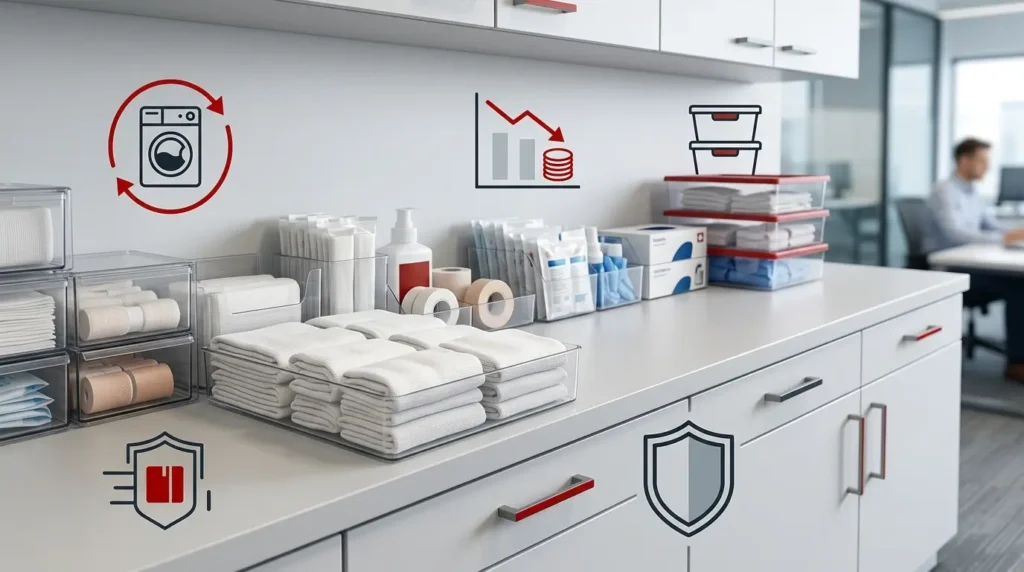
Washable and reusable bandages can be cost-effective for workplace first aid kits when they are cleaned, dried, stored, and inspected properly.
How Cotton Material Helps Reduce Skin Discomfort
Cotton material can feel gentler on the skin compared with rougher or overly synthetic wrapping materials.
When to Replace a Worn, Dirty or Overstretched Bandage
Replace the bandage when it loses elasticity, becomes dirty, smells unpleasant, or no longer wraps securely.
What Are the 6 Common Uses of Crepe Bandage for Workplace First Aid?
The 6 common uses of crepe bandage are supporting sprains, reducing swelling, stabilising joints, securing dressings, protecting wound coverings, and applying gentle pressure.
These uses are practical for many workplace environments. However, first aiders must understand that crepe bandage is a support tool, not a substitute for professional medical treatment.
Use 1 — Supporting Sprains and Strains
A crepe bandage supports sprains and strains by limiting excessive movement around injured ligaments, tendons, and muscles during early first aid response.
Sprains often affect ankles, wrists, or knees. Strains may affect muscles after lifting, twisting, or repetitive movement. A bandage can help the injured person rest the area safely.
How Crepe Bandage Stabilises Soft Tissue Injuries
Crepe bandage helps stabilise soft tissue injuries by wrapping the affected area with gentle, even pressure.
Common Workplace Examples: Wrist, Ankle and Knee Strain
Common examples include ankle twists, wrist strain from handling stock, or knee discomfort after long standing hours.
When the Injury Needs Medical Assessment Instead
Seek medical help if pain is severe, swelling increases, movement is limited, or deformity is visible.
Use 2 — Reducing Swelling After Minor Injury
A crepe bandage can reduce swelling after minor injury by applying controlled compression around the affected area without blocking normal blood circulation.
Swelling may occur after a bump, twist, or strain. Compression works best when combined with rest, elevation, and proper monitoring.
How Gentle Compression Helps Control Swelling
Gentle compression supports swelling control by reducing excessive fluid movement into the injured tissue area.
Why the Bandage Should Start Below the Injury
Starting below the injury helps create upward support and more even pressure.
What to Check After Wrapping the Affected Area
Check skin colour, temperature, sensation, pain level, and whether the person feels numbness or tingling.
Use 3 — Providing Light Joint Support During Recovery
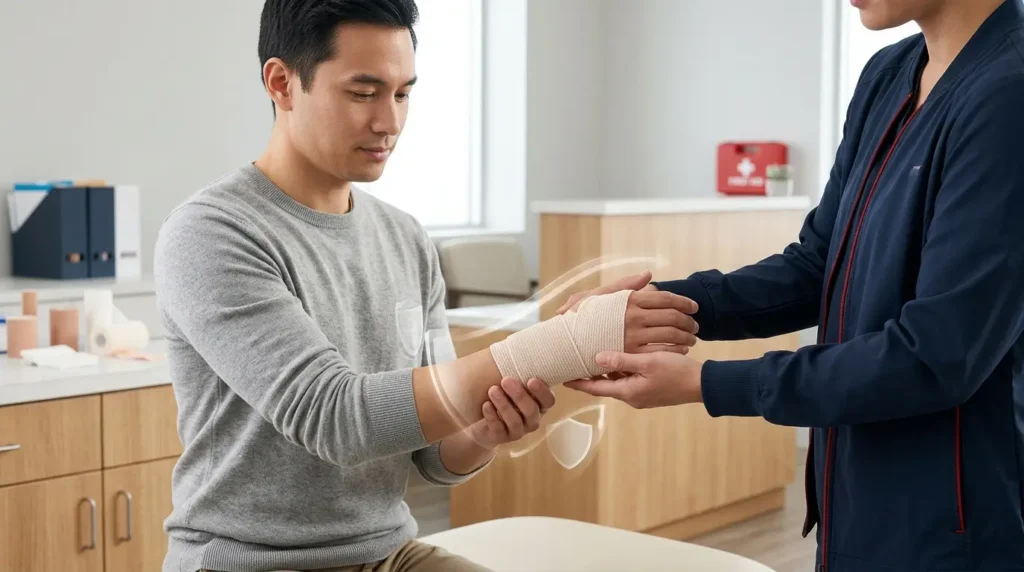
A crepe bandage provides light joint support during recovery by giving temporary stability to weak, sore, or mildly injured movement areas.
This can help staff avoid unnecessary strain while walking, standing, typing, packing, or handling light duties. It should not be used to force someone back into work too early.
When Crepe Bandage Helps Weak or Sore Joints
Crepe bandage helps when a joint feels mildly unstable, strained, or sore after a minor workplace activity.
How It Supports Movement Without Fully Immobilising the Limb
It supports movement by reducing excessive motion while still allowing careful functional use.
Why Workplace First Aiders Should Avoid Over-Tight Wrapping
Over-tight wrapping can cause pain, numbness, poor circulation, and additional injury risk.
Use 4 — Securing Sterile Dressings Over Wounds
A crepe bandage can secure sterile dressings over wounds by holding gauze or wound pads in position without placing fabric directly onto broken skin.
This is important because open wounds require clean, sterile coverage first. The bandage should act as an outer layer, not the wound-contact layer.
Why Crepe Bandage Should Not Be Placed Directly on Open Wounds
Crepe bandage should not be placed directly on open wounds because it is not a sterile wound dressing.
How to Wrap Over Gauze or a Wound Pad Safely
Place a sterile pad first, then wrap the bandage gently to hold it in place.
When to Change the Dressing and Reapply the Bandage
Change the dressing if it becomes wet, dirty, loose, or contaminated.
Use 5 — Protecting Wound Dressings from Movement and Contamination
A crepe bandage protects wound dressings by reducing movement, covering edges, and helping keep the sterile pad secure during basic workplace activity.
This is useful in workplaces with dust, movement, packaging, tools, counters, or shared equipment. The goal is to keep the dressing stable until proper care continues.
How Complete Coverage Improves Dressing Protection
Complete coverage helps prevent the dressing from shifting, peeling, or exposing the wound area.
Why the Bandage Should Extend Beyond the Dressing Edges
Extending beyond the dressing edges gives better hold and reduces accidental lifting.
When Dirt, Dust or Movement Increases Risk
Risk increases when employees work near stock, floors, tools, machinery, or outdoor areas.
Use 6 — Applying Gentle Pressure for Minor Bleeding Control
A crepe bandage can apply gentle pressure for minor bleeding control when used over a sterile pad and monitored carefully by a trained first aider.
The bandage helps maintain pressure, but heavy or persistent bleeding needs urgent medical attention. It should never delay emergency care.
How Crepe Bandage Helps Hold Pressure Over a Dressing
Crepe bandage helps hold pressure by securing the sterile dressing firmly over a minor bleeding point.
Why Bleeding Control Still Requires a Sterile Pad First
A sterile pad reduces contamination risk and absorbs blood before the bandage is applied.
When Persistent Bleeding Requires Immediate Medical Help
Get urgent help if bleeding soaks through, does not stop, or follows a deep wound.
How Should a Crepe Bandage Be Applied Correctly?
A crepe bandage should be applied with even tension, correct sizing, smooth layers, and regular circulation checks to prevent discomfort or restricted blood flow.
Correct application is important because poor wrapping can make the injury worse. First aiders should avoid uneven pressure, twisted fabric, or excessive tightness.
Step 1 — Choose the Right Crepe Bandage Size
Choosing the right crepe bandage size helps deliver safer compression, better coverage, and more comfortable support for different body areas.
Smaller widths are usually better for hands or wrists. Wider sizes are more suitable for knees, thighs, shoulders, or larger areas.
When to Use 5cm, 7.5cm, 10cm or 15cm Bandage Widths
Different widths suit different areas, depending on body size, injury location, and required support level.
Step 2 — Start Wrapping from the Narrowest or Lower Area
Starting from the narrowest or lower area helps create controlled upward support and more even compression around the injury.
For an ankle, wrapping usually begins near the foot and moves upward. For a wrist, wrapping may begin near the hand and move toward the forearm.
Why Wrapping Upward Helps Support Swelling Control
Wrapping upward supports fluid movement and helps avoid uneven pressure around the injured area.
Step 3 — Apply Firm but Safe Tension
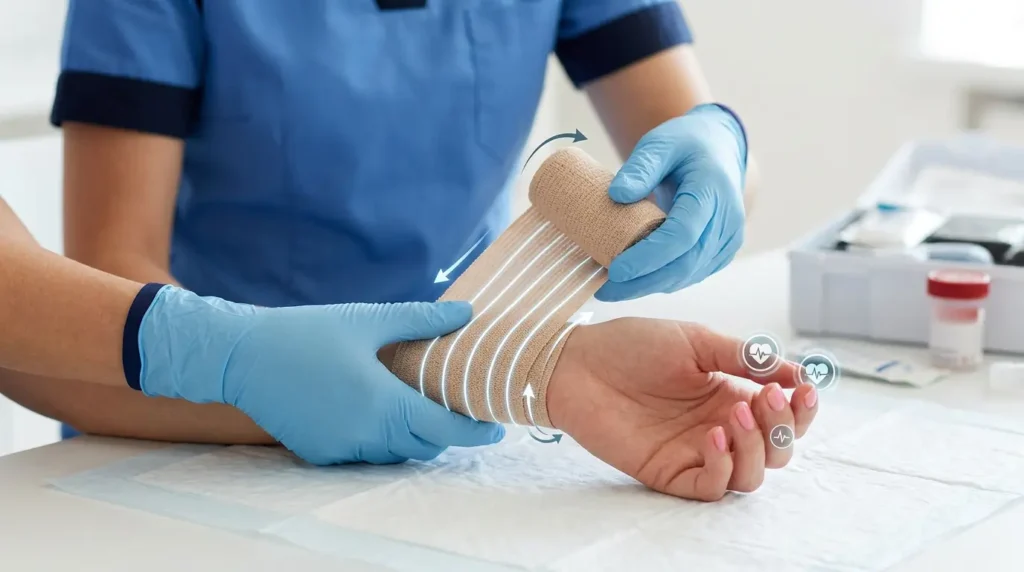
Firm but safe tension means the bandage feels supportive without causing numbness, tingling, coldness, blue skin, or increased pain.
After wrapping, check the area beyond the bandage. Fingers and toes should remain warm, normally coloured, and easy to move.
How to Avoid Cutting Off Blood Circulation
Avoid circulation problems by keeping the wrap smooth, moderate, and regularly checked after application.
When Should a Crepe Bandage Not Be Used?
A crepe bandage should not be used when there is severe pain, suspected fracture, heavy bleeding, open wounds without dressing, or signs of poor circulation.
Businesses must train staff to recognise limits. First aid is temporary support, not a replacement for clinical assessment.
Why Crepe Bandage Should Not Replace Medical Treatment
Crepe bandage should not replace medical treatment because fractures, serious sprains, deep wounds, infections, and circulation problems require professional diagnosis and care.
If the injured person cannot move normally, has severe swelling, or experiences worsening symptoms, medical help is the safer option.
When Pain, Swelling or Movement Problems Need Professional Care
Professional care is needed when pain is intense, swelling spreads, or the injured person cannot bear weight.
Why Crepe Bandage Should Not Be Used Directly on Open Wounds
Crepe bandage should not be used directly on open wounds because the wound requires sterile protection before any outer wrapping is applied.
Using it directly may introduce dirt, fibres, or contamination. Always use sterile gauze or a wound pad first.
Why Sterile Dressing Must Come First
Sterile dressing protects the wound surface and reduces contamination before outer bandaging.
Crepe Bandage vs Elastic Bandage: Which One Is Better for Workplace First Aid?
Crepe bandage is often better for general light support, while stronger elastic bandages may suit firmer compression needs depending on injury type and instructions.
The right choice depends on purpose. Workplace first aid kits may benefit from having different bandage types for different situations.
How Crepe Bandage Provides Light to Medium Support
Crepe bandage provides light to medium support by combining flexibility, breathability, and manageable compression for common minor workplace injuries.
This makes it suitable for sprains, strains, dressing retention, and temporary joint support. For more serious injuries, use first aid only while arranging medical assessment.
When Crepe Bandage Is Suitable for Minor Injuries
Crepe bandage is suitable when the injury is mild, circulation is normal, and the person only needs temporary support.
How Can Businesses Improve First Aid Preparedness with Crepe Bandage Supplies?
Businesses can improve first aid preparedness by stocking multiple crepe bandage sizes, training appointed first aiders, and checking supplies after use or scheduled audits.
For SMEs, agencies, retailers, warehouses, clinics, event crews, and start-ups, first aid planning should be practical. A kit is only useful when items are available, clean, and suitable.
Why Different Bandage Sizes Improve Emergency Readiness
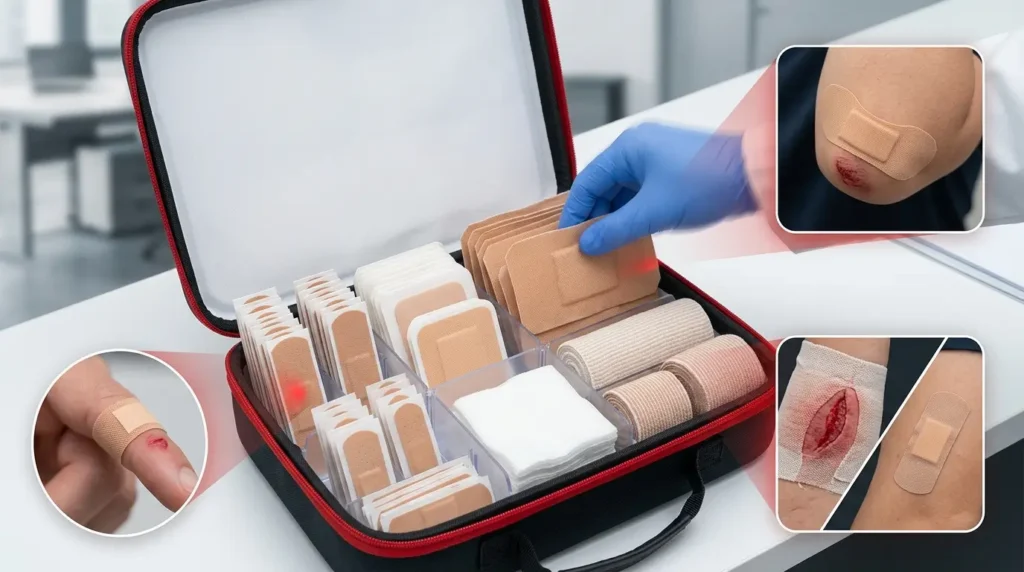
Different bandage sizes improve emergency readiness because small wrists, larger knees, ankles, arms, and body areas require different coverage and compression levels.
A workplace kit should not depend on one bandage size. Having several options helps first aiders respond more appropriately.
How to Stock Crepe Bandage in Office, Retail, Warehouse and Event Settings
Stock crepe bandage with sterile dressings, gloves, scissors, antiseptic wipes, triangular bandages, adhesive tape, and an updated first aid checklist.
Why First Aid Kit Checks Should Be Scheduled Regularly
Regular checks help ensure bandages are clean, unused, properly stored, and ready for emergencies.
When to Restock Used or Expired First Aid Items
Restock immediately after use, contamination, expiry, damage, or routine safety inspection.
A crepe bandage is a simple but valuable workplace first aid item for supporting sprains, reducing swelling, securing dressings, protecting wound coverings, and applying gentle pressure when used correctly.
For Malaysian businesses, proper first aid readiness supports safer daily operations, staff confidence, and faster response during minor incidents. The key is not only stocking bandages, but also knowing how to apply them safely and when to seek medical care.
If your business is reviewing first aid readiness, start by checking whether your workplace kit includes different bandage types, sterile dressings, gloves, scissors, and basic wound-care supplies.
For a clearer product reference, you can explore this guide on types of bandages every first aid kit should have and compare what your current kit may be missing before your next safety audit.
FAQ About Crepe Bandage for Workplace First Aid
What Are the Primary Uses of a Crepe Bandage?
A crepe bandage is primarily used for light compression, soft tissue support, swelling control, dressing retention, and minor joint stabilisation. In workplace first aid, it is commonly applied for sprains, strains, minor swelling, and securing sterile wound pads. It should be used as temporary support, not as a replacement for medical treatment when pain, bleeding, or swelling is severe.
How to Correctly Apply a Crepe Bandage to a Sprained Ankle?
To apply a crepe bandage to a sprained ankle, start below the injured area and wrap upward with smooth, even layers. Keep the tension firm but not tight. After wrapping, check the toes for normal colour, warmth, movement, and sensation. If numbness, tingling, coldness, or increased pain appears, loosen or remove the bandage immediately.
How Often Should a Crepe Bandage Be Changed or Rewrapped?
A crepe bandage should be rechecked regularly and rewrapped if it becomes loose, dirty, wet, uncomfortable, or uneven. It should also be adjusted if swelling changes. In workplace first aid, the bandage should not stay on without monitoring, especially if the injured person reports pain, numbness, tingling, or restricted movement.
What Is the Difference Between Elastic and Crepe Bandages?
An elastic bandage usually provides stronger stretch and firmer compression, while a crepe bandage commonly provides light to medium support with breathable flexibility. Some products combine elastic fibres with crepe-style weaving. For workplace first aid, the better choice depends on the injury, body area, compression need, and product instructions.
How to Choose the Right Crepe Bandage for Ankle Support?
Choose a crepe bandage for ankle support based on width, stretch, comfort, and coverage. A medium-width bandage is often suitable for ankle wrapping, while larger body areas may need wider options. The bandage should support the ankle without cutting off circulation, restricting toe movement, or causing discomfort.